In an emergency, every second counts. Whether it’s a threat to a school, bank, store, or public office, a panic alarm provides an immediate, discreet way to call for help. Unlike fumbling with your phone to dial 911, panic alarms enable rapid response with a single press. Some are designed to alert authorities without drawing attention, while others sound alarms to warn others nearby. Monitoring stations can also use triggered panic alarms to verify an emergency, ensuring quick police response to your property.
Panic alarms are versatile, cost-effective tools that enhance safety for anyone in any environment. This guide will explore the essential benefits, variations, and applications of panic alarms—and why they’re a must-have for institutions and individuals committed to security.
Do you need a panic alarm?
If you are new to panic alarms, one of two things might come to mind.
- The I’ve fallen, and I can’t get up commercial, often associated with medical alert systems.
- A bank teller cautiously pressing a hidden red button under their desk to summon help in a dangerous situation.
These are two valid situations where a panic button is useful. However, they have benefits for anyone.
Before deciding if you should be in the market for a panic alarm, it’s important to understand the different kinds. To keep things simple, we’ll separate panic alarms into two groups: hardwired and wireless.
Hardwired
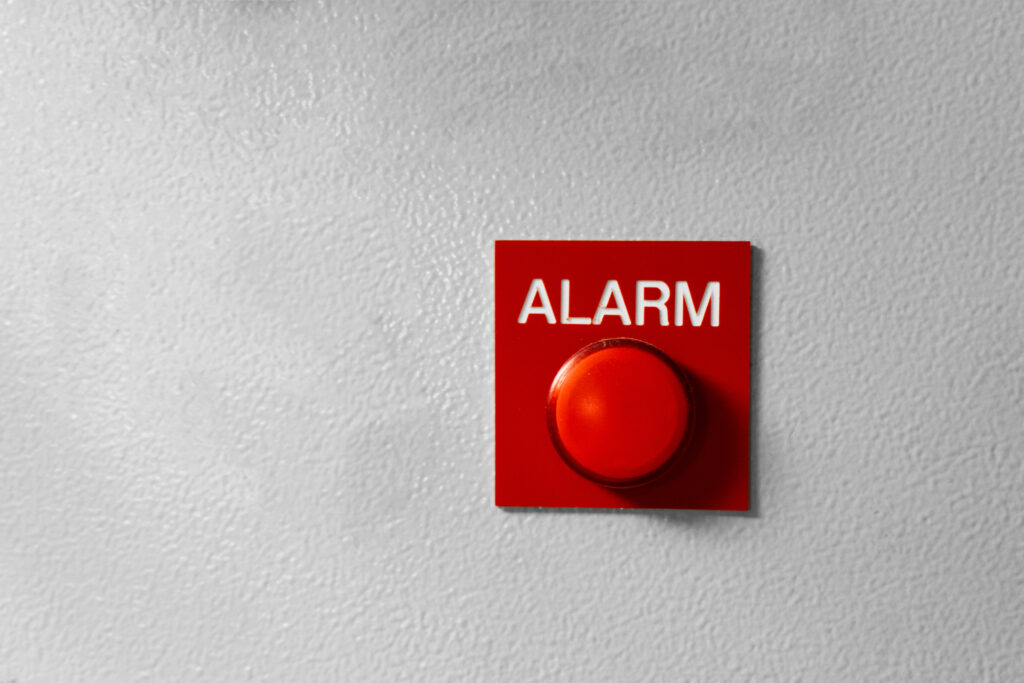
Hardwired panic alarms are often mounted on walls near other security measures like fire alarm pull stations and burglar alarms. They are most common in school settings or public offices with high-volume foot traffic. Anyone who spots a dangerous individual or situation can activate to sound the alarm and call for police response.
Hardwired panic alarms have secure communication, making them less vulnerable to interference, hacking, or signal jamming. Merging directly with other systems streamlines emergency response. At a larger facility with dense walls, signals won’t be blocked, and integrated alarms will reach everyone in the building.
Wireless
If you prefer a lower-profile panic alarm or one that relocates as needs change, wireless options also exist. These alarms can be stored in isolated areas, like desk drawers or harder-to-reach places that aren’t feasible for hardwired systems.
Portable models can be worn on a lanyard or fastened to a belt clip, providing flexibility to adapt as personnel changes. Not to mention, they are quick to activate as you can press the button at a moment’s notice. Wireless buttons best suit individual use, cashiers, and caregivers in high-risk environments.

What sets panic alarms apart from other security measures?
Whether mounted or worn as an accessory, panic alarms provide many benefits that distinguish them from other technology.
- Quick and easy activation: Panic alarms eliminate the need to pull out a phone and dial 911. With a single press of a button, help is on the way, making this technology one of the fastest ways to alert authorities.
- Budget-friendly and low-effort: Panic alarms are inexpensive addition to a security system, and some don’t require installation efforts. They fit various budgets, making them accessible to businesses of any size and individuals seeking additional precautions for personal security.
- Customizable alerting options: Unlike other emergency responses, they provide a subtle way to signal for help without drawing attention. This capability is lifesaving when you are confronted with someone exhibiting threatening behavior. Alternatively, there are buttons programmed to emit an audible alarm so everyone in the immediate area is alerted to seek safety.
Top candidates
While we mentioned that panic alarms can add a protective layer to anyone’s personal and community security, they are invaluable for a variety of industries and individuals.
- Schools and teachers: In case of emergencies, panic alarms allow teachers to immediately call for help while maintaining the safety of their students. Panic alarms can also integrate with door security systems. When activated, doors will automatically shut and lock, securing students and staff from external threats.
- Financial institutions and jewelry stores: High-value targets face a significantly increased risk of robbery. Panic alarms, specifically wireless and silent models, can be non-negotiable for anyone working in these environments. Even in the absence of a threat, they provide peace of mind when interacting with customers and processing money transfers.
- Retail stores: Stores that handle large amounts of cash are also at a heightened risk of theft, and wireless panic buttons equip employees with a discreet way to call for assistance. Covert panic buttons allow employees to avoid escalating a dangerous situation. Once employees identify suspicious behavior, police can be notified, and help is on the way.
- Government offices: These locations often deal with a high volume of visitors, making them susceptible to threats. Panic alarms help secure these spaces without disturbing day-to-day operations. Buttons combined with other security, like door locks and security guard alerts can sufficiently protect the area by keeping all officials informed and prepared for emergencies.
In conclusion
With security concerns becoming more common, panic alarms provide a straightforward yet powerful solution for a wide range of environments. The affordability, ease of use, and communication capabilities make them an essential investment for anyone seeking reliable emergency response. Whether in schools, retail stores, or public offices, these devices play a crucial role in protecting people, assets, and communities.
Updated on: June 4th, 2026