Door locks can be traced back thousands of years, making them one of the oldest and most fundamental security practices still in use today. They’ve also evolved quite a bit since the days of wooden pins and even standard deadbolts. Modern electronic door locks offer a combination of security, convenience, and technology to safeguard your workspace. In this guide, we’ll explore different types of electronic locks, key features to consider, and integration with your existing security system.
Types of electronic door locks for offices
Sure, standard deadbolt locks are cost-effective and when it comes to securing a space, they get the job done. However, in today’s technologic world, they come with a few setbacks. Physical keys can fall into the wrong hands and locks can be tampered with, meaning they are at a heightened risk of unauthorized access. They are also unable to adapt to modern security systems.
Standard locks have glaring limitations compared to their electronic counterparts, especially when it comes to maximum security. To better understand the advantages of modern security solutions, let’s start by breaking down the different methods of access available with today’s advanced keyless and smart locks.
Keyless entry locks
Keyless entry locks eliminate the reliance on traditional keys, offering enhanced security and ease of access. The most common types you might encounter are keypad locks that use a PIN code and RFID locks, which require keycards or fobs for quick entry. For offices that call for an elevated level of security to protect classified information or valuable assets, you might opt for biometric locks, bypassed only by unique fingerprint or facial recognition technology.
Smart locks
Smart locks connect to the internet or Bluetooth-enabled technology for remote control and monitoring. Access can be granted by fobs, keycards, or even smartphones to remove the need for extra devices. Smart locks also log entry and exit times, helping track who accesses the office with time stamps.
Utilizing the internet and Bluetooth lends nicely to integration with your existing security system. Linking smart locks with security cameras, burglar alarms, and access control allows for enhanced protection and flexibility to manipulate who has access and when. We will cover more on how security services can pair with your electronic door locks later in the guide.
Smart locks vs. traditional electronic locks
Each type of lock has its own set of advantages and disadvantages that should be carefully evaluated based on your specific security needs, budget, and level of convenience required before determining which one is best for you.
- Smart locks offer remote control, automation, and integration, but may be vulnerable to cyber threats. Having proper security coverage is imperative. Larger companies will find the ability to customize access permissions like granting temporary access to visitors and employees can immensely contribute to day-to-day business efficiency.
- Traditional keypad or RFID locks are budget friendly and provide reliable access control without requiring internet connectivity. However, they lack remote management capabilities, and they do not connect well with broader security ecosystems like burglar alarms and security cameras. These traditional variants are often sufficient for small offices with fewer employees coming and going or buildings with unreliable Wi-Fi.
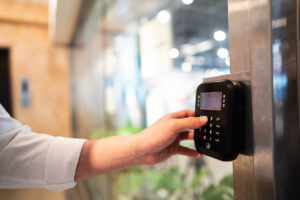
- When to upgrade: Businesses looking to enhance security with maximum convenience, remote access, and seamless integration with existing security systems should look into upgrading to smart locks as a strategic and future-proof choice.
Choosing the right lock based on office needs
Different office environments require tailored security solutions to address their unique risks and requirements. It’s important to consider what you are protecting and who you are protecting it from.
For example, an external door is at higher risk than one inside a building. You might also choose a more sophisticated keyless entry for areas that contain sensitive information, expensive equipment, or potential hazards. The biometric lock is the most secure electronic door lock system due to its advanced authentication methods, making unauthorized access nearly impossible.
For general office use, smart locks offer many benefits that are conducive to optimized business efficiency. Granting, revoking, or updating access permissions is as simple as toggling options in an app. Locks can be controlled remotely, and activity logs provide useful data that can contribute to productivity.
Ensuring your office meets HIPAA, PCI-DSS, or other industry-specific security standards is encouraged by security professionals. Start by researching the compliance and regulations that apply to your business or contact your provider to have an expert walk you through the necessary steps and best practices.
Integrating electronic locks with a commercial security system
The advantages of electronic door locks don’t stop at general convenience and trackability. You can maximize the benefits when you combine them with broader security solutions, especially with smart locks that connect to the internet or Bluetooth.
- Burglar alarms that trigger during a forced entry deter trespassers and keep you informed in the event of suspicious activity. Having records of who accessed what door and when can help you determine if a security alert is cause for concern or a false alarm.
- Security cameras (CCTV) provide an additional layer of defense by capturing video footage of security breaches or misconduct. Access to footage has a variety of benefits, including protection against liability and criminal evidence.
- Panic alarms can integrate with every door in an office building—so in an emergency, activating a panic alarm can initiate a lockdown to protect employees and assets. Standard deadbolts are not compatible with automations or remote control which can create limitations
- Professional monitoring assists with immediate threat response to mitigate consequences during a break in. Choosing to monitor your property through a security company ensures protection around the clock and police departments give higher priority to alarms verified by monitoring centers.
Office door lock installation and maintenance
Like all technology, electronic door locks require an initial installation process as well as periodic check ins.
Professional installation vs. DIY
Depending on budget, some companies will choose to perform their own installation. While DIY setup can be cost-effective up-front, professional installation ensures reliability and security.
Routine security audits & maintenance
Your keyless locks can only enhance security if they function properly. Regular audits and maintenance are essential to prevent malfunctions, detect vulnerabilities, and ensure compliance with security policies.
Office security beyond door locks
While electronic locks offer convenience and significantly improve security, a multi-layered approach provides the most comprehensive protection for your office. Integrating additional security measures—such as surveillance cameras, alarm systems, and access control management—enhances overall office security by ensuring your locking system works in tandem with other security solutions, each playing a unique role in safeguarding your business.
By combining multiple security layers, you create a robust defense against potential threats, reducing vulnerabilities, increasing efficiency, and ultimately providing greater peace of mind. This approach not only enhances security but also maximizes the value of your investment, ensuring long-term protection while minimizing risks and potential losses.
Investing in the right electronic door lock system is a crucial step in protecting your office, employees, and valuable assets while maintaining smooth daily operations. To make the most informed decision, evaluate your specific security needs. Then, consult with experts to find the best solution tailored to your business.
Updated on: June 5th, 2026