Your trucks and vans don’t stop working when the sun goes down. Parked in a lot or yard overnight, they hold thousands of dollars in tools, materials, and cargo. Thieves know this and they also know that catalytic converters, copper wiring, and other metal parts sell fast for cash.
This guide walks you through the real risks your fleet faces after hours. More importantly, it shows you practical ways to keep your vehicles, equipment, and bottom line safe.
Why are commercial fleets a target?
A parked fleet is a predictable, high-value target. Vehicles sit in the same spot night after night, often loaded with expensive gear. And many lots have little to no protection once employees head home.
Criminals look for easy opportunities. An unlit lot with no cameras or gate signals that a business isn’t watching. That makes your fleet an appealing choice for a quick, low risk hit.
Cargo theft, auto theft, and vandalism
Overnight threats to your fleet usually fall into three categories:
- Cargo theft: Thieves break into vehicles to steal tools, copper pipe, wiring, and job-site materials. Metal is favorable because it’s easy to resell.
- Auto theft: Some criminals take the entire vehicle. Others strip valuable parts like catalytic converters, which contain precious metals.
- Vandalism: Broken windows, slashed tires, and graffiti cost money to repair and pull vehicles off the road.
Scrap metal theft deserves special attention. A catalytic converter can be removed in minutes with a battery-powered saw. The stolen part might sell for a few hundred dollars at a scrapyard, but the replacement can cost you well over a thousand, plus downtime. According to the National Insurance Crime Bureau, catalytic converter thefts have surged in recent years, hitting service fleets especially hard.
Vehicle theft prevention for outdoor parking lots
Protecting an outdoor lot means building layers of security. No single tool stops every threat. Instead, you combine daily habits, cameras, access control, and smart design to make your property a hard target.
Daily parking and lockdown procedures

Good security starts with consistent routines. Train your team to follow these steps every night:
- Park vehicles in well-lit, visible areas, and back them against walls or each other to block access to fuel caps and catalytic converters.
- Remove valuable tools and materials, or store them in locked, in-vehicle cabinets.
- Lock every door and roll up every window before leaving.
- Take the keys inside—never hide a spare in or near the vehicle.
- Do a quick walk-through to confirm the lot is secure.
Parking lot security cameras for 24/7 overnight monitoring
Security cameras are the backbone of fleet protection. A camera is a device that records video of your property so you can watch activity live or review it later. For overnight coverage, look for these features:
- Night vision: Infrared cameras capture clear footage in total darkness.
- Motion sensors: The system notifies you when it detects movement in restricted areas.
- Cloud storage: Footage is saved off-site, so thieves can’t destroy the evidence.
- Remote viewing: You check live feeds from your phone, anytime.
Cameras do double duty. They deter criminals who spot them, and they give police usable evidence when a crime does happen. To dig deeper into camera types and placement, explore Bay Alarm’s guide to commercial security cameras.
Parking lot access control for gated fleet yards
Access control decides who can enter your property and when. If you park behind a fence, a gated system adds a strong barrier between your vehicles and the street.
Common access control tools include:
- Keypad or key-card gates that require a code or badge to open.
- Mobile credentials that let drivers open the gate from an app.
- Entry logs that record exactly who came and went, and at what time.
For fleets in gated yards, access control turns an open lot into a controlled space. Only approved drivers get in, and you have a clear record of every entry.
Lighting and perimeter design
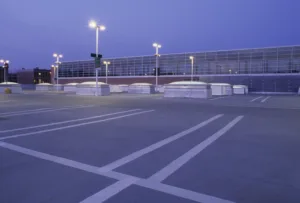
Thieves avoid the spotlight, so bright, even lighting removes the shadows they use for cover. Motion-activated floodlights add an extra jolt—when someone approaches, the sudden light draws attention and often sends them running.
Strengthen your perimeter with these design choices:
- Install lighting along fences, entrances, and between parked vehicles.
- Trim bushes and trees that create hiding spots.
- Post clear signage that warns of cameras and alarms.
- Use fencing or bollards to block vehicle access to your lot.
Together, lighting and layout make your property feel watched, which is exactly the impression you want.
At-risk businesses
Some industries face higher odds of overnight theft because their vehicles carry valuable metal, tools, and equipment. If you run one of these businesses, fleet security should be a top priority:
- HVAC: Copper coils, refrigerant, and expensive tools make these vans a magnet for scrap metal theft.
- Pest control: Chemicals, sprayers, and specialized equipment are costly to replace.
- Landscaping: Mowers, trimmers, and hand tools are easy to grab and quick to resell.
- Moving: Trucks hold customer belongings and heavy-duty gear.
- Trucking: Full cargo loads and high-value vehicle parts attract organized thieves.
Choosing a security system for your commercial fleet
The right system fits your property, your budget, and your industry. As you compare options, keep these factors in mind:
- Coverage: Make sure cameras and sensors reach every vehicle and entry point.
- Monitoring: Professional monitoring means someone responds to alarms even while you sleep.
- Scalability: Choose a system that grows as you add trucks or locations.
- Integration: Cameras, access control, and lighting work best when they connect in one platform.
- Flexibility: Mobile surveillance trailers cover blind spots and can move as your needs change.
- Support: Reliable installation and service keep your system running year-round.
Start with your biggest weak spot. If your lot is dark, add lighting. If it’s open to the street, add access control. Then layer in cameras and monitoring for full, round-the-clock protection. For help understanding which components are must-haves for your security system, consider taking a risk assessment.
Frequently asked questions
How can I prevent cargo theft in my parking lot?
- Combine several layers of protection. Remove valuable tools and metal from vehicles overnight or lock them in secure cabinets. Add motion-activated cameras and lighting to deter thieves and capture evidence. Train your team to follow a nightly lockdown routine, and park vehicles close together to block access to high-value parts.
How much does fleet security cost?
- Costs vary based on your lot size, the number of vehicles, and the tools you choose. A basic camera setup costs far less than a full system with access control and professional monitoring. When you weigh the price, compare it to the cost of a single stolen catalytic converter, a broken window, or a truck off the road for repairs. Prevention almost always costs less than replacement.
How do I protect a fleet in an ungated lot?
- Without a fence, focus on visibility and deterrence. Install bright, motion-activated lighting across the lot. Position cameras with night vision and remote alerts to cover every vehicle. Park trucks defensively, back-to-back or against walls, to shield vulnerable parts. Clear signage that warns of active monitoring adds one more layer of protection. If your lot allows it, consider adding bollards or fencing over time to build a stronger perimeter.
Updated on: October 19th, 2026