Discover how to choose the best commercial access control system for your office. Learn about system types, key features, benefits, and important considerations to keep your workplace secure and efficient.
Why access control matters for offices
Security is a top priority for any business, but it’s about more than just keeping intruders out. A commercial access control system helps you regulate who can enter your office, track movements within the building, and protect sensitive areas such as server rooms or records storage. Unlike traditional lock-and-key setups, modern systems use digital technology to provide both convenience and a higher level of security.
Access control also improves employee experience—no more managing multiple keys or worrying about lost ones. Instead, team members can use badges, codes, or even mobile apps to access only the areas they’re required to go for their respective role.
Types of commercial access control systems
Not all systems work the same way. The right choice depends on your office size, security needs, and budget.
Keypad systems
With a keypad system, employees enter a personal identification number (PIN) to gain entry. These systems are affordable and easy to use, making them a popular choice for small offices. However, they can be less secure if codes are shared or written down, so regular updates to PINs are recommended.
Card or fob-based systems
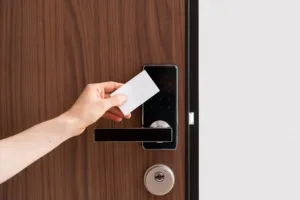
This type of system uses physical credentials—like a swipe card or proximity fob—that employees present to unlock doors. They are widely used in commercial settings and relatively simple to manage. Credentials can be quickly deactivated to maintain security in the event someone loses their card or fob.
Biometric systems
Biometric access control relies on unique physical characteristics such as fingerprints, facial recognition, or iris scans to verify identity. Because these traits can’t be lost or shared, biometrics offer a very high level of security. Costs can be higher than other systems, so they are primarily used in industries where protecting sensitive information or equipment is critical.
Mobile-based access
Mobile access systems allow employees to use their smartphones as a key, usually via Bluetooth, NFC, or a dedicated app. This option is convenient and flexible, as most people always carry their phones. It also eliminates the need to issue physical credentials. However, businesses should consider device compatibility and cybersecurity measures.
Key features to look for
When comparing commercial access control systems, consider which features will benefit your office most:
- Scalability: Can the system grow with your business?
- Integration: Does it work with existing video surveillance or alarm systems?
- Remote management: Can you control access from a computer or mobile device?
- Audit trails: Does it log who enters and exits, and when?
- User management: How easy is it to add or remove employees from the system?
Benefits of installing access control
Implementing a commercial access control system provides value that goes beyond simply locking doors. Here are some of the most important advantages for offices of all sizes:
- Increased workplace safety: By controlling who can enter your office, you reduce the risk of unauthorized individuals gaining access. This helps create a safer environment for employees, clients, and visitors. In the event of an emergency, access control can also assist with lockdown procedures or evacuation management.
- Better protection for confidential information: Many offices house sensitive data, whether in physical files or on secure servers. Access control ensures only authorized personnel can reach these areas, helping your business maintain compliance with privacy regulations and protect valuable intellectual property.
- Reduced risk of theft or unauthorized entry: Traditional keys can be copied or misplaced, creating vulnerabilities. And changing traditional locks can be time-consuming. Opting for electronic keys reduces the likelihood of theft, vandalism, or other costly incidents.
- Greater convenience for employees and administrators: Access control eliminates the hassle of carrying and managing multiple keys. Employees use a single credential or app, while administrators can easily add, update, or remove access rights from a central system—no need to rekey locks when staff changes occur.
- Ability to quickly restrict access: If an employee leaves the company or a credential is lost, access rights can be revoked instantly. This level of control provides peace of mind, ensuring that only the right people can enter your building at any given time.
Common use cases, from small offices to multi-tenant buildings
Commercial access control systems are versatile and can be tailored to fit different types of workplaces. Whether you’re running a small business or managing a large commercial property, the right system can simplify operations and strengthen security.
Small offices
For startups or small businesses with just a few employees, access control offers an affordable way to replace traditional keys. A simple keypad or mobile-based system provides security without unnecessary complexity.

Mid-sized companies
As businesses grow, so does the need to manage more employees and multiple entry points. Card or fob-based systems are popular at this scale because they balance security, convenience, and scalability.
Large corporate offices
Enterprises with hundreds or thousands of employees often require advanced solutions. Biometric or integrated access control systems allow for detailed user permissions, audit trails, and seamless integration with video surveillance or alarm systems.
Multi-tenant buildings
Property managers can use access control to regulate entry for multiple businesses under one roof. Tenants receive unique credentials for shared entrances, while individual companies maintain control over access to their private office areas.
High-security environments
Industries like finance, healthcare, or government facilities often require stricter safeguards. Biometric verification, two-factor authentication, and integration with cybersecurity protocols are commonly used to meet compliance and security standards.
How to compare commercial access control vendors
When evaluating commercial access control vendors, it’s important to look beyond the system itself. A good provider should offer a smooth installation process with minimal disruption, reliable technical support, and knowledge of industry compliance requirements. This ensures your office not only gets the right technology but also meets necessary security and regulatory standards.
You’ll also want to confirm the system can grow with your business. Ask vendors about scalability, upgrade options, and integration with other security tools like alarms or video surveillance. Choosing a partner who can provide long-term support and system improvements will save your business time, money, and future headaches.
Getting started with your decision
The best commercial access control system for your office will depend on your company’s size, industry, and security requirements. Start by assessing:
- How many employees and visitors need access?
- Which areas require restricted entry?
- What budget do you have for installation and ongoing maintenance?
Once you’ve identified your needs, you can compare systems and vendors.
Final thoughts
Commercial access control systems are more than just a layer of security—they’re tools that improve efficiency, protect sensitive areas, and create peace of mind. By understanding the types, features, and benefits, you’ll be equipped to choose the right solution for your office.
For more insights into business security solutions, explore the Bay Alarm website.
Updated on: June 11th, 2026