
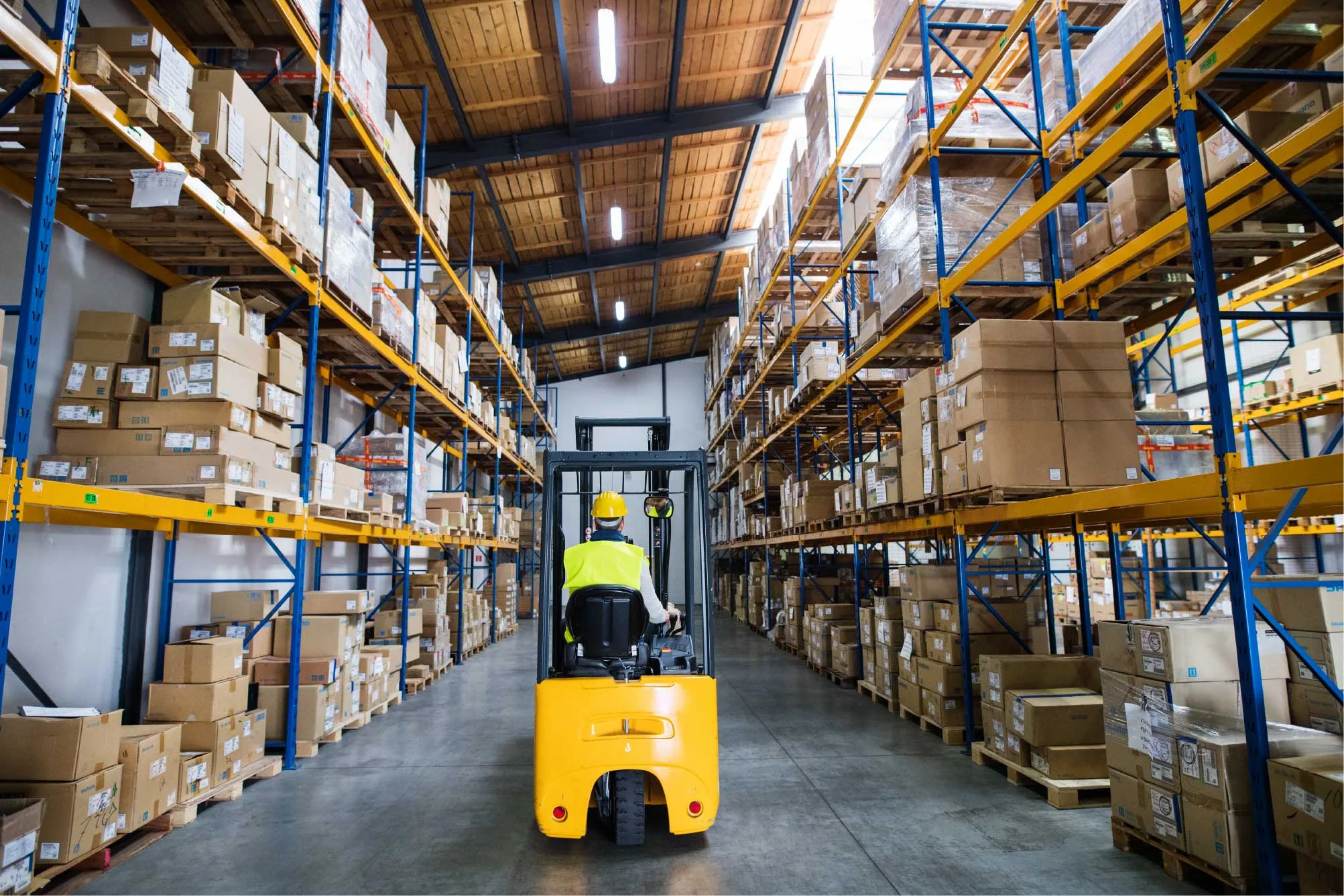
How to control access to a warehouse without slowing down operations
Controlling access and preventing theft is difficult anywhere, but it’s especially challenging in large, expansive facilities with high-value items and heavy foot traffic. That’s why safeguarding a warehouse is a complex security challenge that requires a multifaceted approach to access control.
This blog looks at the major security risks associated with warehouses, reviews security tools and systems to minimize those risks, and discusses effective access control strategies for maintaining a secure warehouse.
What are the top security risks for warehouses?
Warehouses need strong and proactive security measures. They face significant security risks that could lead to serious consequences.
Top threats to warehouse security
- Theft
Valuable goods, materials, and equipment are moved in, around, and through a warehouse every day. Monitoring the high volume of expensive products on-site is difficult, opening the door for opportunistic thieves.
- Vandalism and trespassing
Trespassing often leads to low-level petty crimes, such as graffiti on exterior walls or broken windows. That’s not only disruptive, but a financial burden. Larger acts of vandalism that cause lasting damage to property can result in financial and reputational damage.
- Inventory loss
The loss of inventory adds up. Over time, all the missing, lost, or stolen inventory will disrupt supply chain operations upstream and downstream, leading to significant economic consequences.
- Liability
Controlling access isn’t solely about preventing theft. Warehouse managers can also use it to document on-site incidents, which helps with liability protection. It also helps law enforcement and insurers conduct their investigations more quickly, accurately, and effectively.
- Compliance
It’s essential to stay compliant with various state and local fire and safety codes, zoning laws, and industry-specific regulations. Failure to do so can result in costly fines, higher safety risks, and damage to your reputation.
What are the most common ways to secure warehouse entry points?
A warehouse property may have dozens of entry points, any of which could pose a security risk.
Securing warehouse entry points is typically done using:
- Badges
A badge is a digital credential that serves as an employee’s electronic key. Credentials can be customized to match each employee’s clearance level, ensuring only authorized personnel have access to high-security areas and offices. Badges also help monitor who enters specific rooms and when.
- PINS
Similar to a badge, a personal identification number (PIN) is a customized credential for staff to access a physical space. A PIN at key entry points serves as an additional deterrent for criminals.
- Biometrics
Biometrics are advanced systems that control access with greater precision and efficiency. Biometrics include facial recognition, fingerprint and retina scans, and voice authentication.
- Gate systems
Not all security methods rely on advanced technology. Physical gates with locks are effective for controlling access and preventing illegal activity within warehouse grounds.
How does video surveillance support access control to warehouses?
Modern video technology offers advanced features that enhance access control measures and strengthen overall warehouse security.
A video surveillance system supports warehouse access control in the following ways:
- Acts as a physical deterrent
The physical presence of cameras and surveillance technology signals to potential criminals that they are being watched and recorded. Sending a strong security message puts doubt into thieves’ minds and stops some from proceeding with their plan.
- Proactively prevents crime
Cameras with AI-enhanced technology proactively prevent crime by alerting security staff to unusual patterns of movement and activity.
- Provides visual verification
Video footage is crucial to verifying key elements of a security incident, including what happened, where it happened, who was involved, and the timeline of events.
- Supports audit trails
Surveillance footage ensures audit trails are accurate and comprehensive by corroborating digital logs, records, and employee statements.
Should you use biometric or electronic access systems?
When you’re looking for a solution for your warehouse security needs, start by exploring access control tools to protect warehouse property and staff most effectively.
Here are the pros and cons of two solutions to consider.
- Biometrics access control system for a warehouse
Biometrics used to be a cool thing you’d see in spy movies about clandestine missions to retrieve top-secret government files. Not anymore. Nowadays, it’s common for companies in high-security environments to use biometric security tools such as facial recognition or iris and retina scanning.
Pros
- Extremely hard to fake
It may look easy to replicate someone’s retina, face, or fingerprints in a movie like Mission Impossible, but in reality, it’s just that: Impossible. Biometrics tighten access and reduce the risk of shared or stolen credentials.
- Fast
When implemented correctly, biometrics provide a faster, more efficient way to navigate space while also lowering the risk of unauthorized personnel entering off-limits areas.
- Contactless
A warehouse with strict hygiene or contact standards can use facial recognition and iris and retina scanning to meet those needs and maintain a safe, healthy physical environment.
- Efficient
Biometric systems include advanced features that make it easy to track activity, access records and logs, and document all physical movement.
Cons
- Expensive
Implementation and management costs are higher than traditional access control systems.
- Privacy-invasive
Unlike a key fob or PIN, biometric data is quite literally personal and must be held to a higher standard of protection.
- Complicated
A lost credential can be a quick fix. It’s not as simple to redo a scan, fingerprint, or any number of issues that will inevitably arise.
Best warehouse environments for biometric access control
- A warehouse that needs ironclad security and maximum access control.
- A property with fewer physical touchpoints for accessibility or hygiene.
- An environment with high staff turnover and credential sharing.
- A facility that would benefit from improved operational efficiency and better compliance.
2. Electronic access system for a warehouse
An electronic access system provides a variety of security benefits along with some downsides to consider.
Pros
- Enhanced security
Digital authentication tools reduce incidents of unauthorized access and add a protective barrier to warehouse security.
- Real-time visibility
Monitoring provides full visibility into all access activity for improved accountability and documentation.
- Customizable
Access can be tailored to ensure staff can only enter areas they have clearance for.
- Remote and flexible control
System managers can view access data, grant and revoke permissions, and adjust settings from anywhere.
- Simple integration
Access control easily combines with security solutions such as video surveillance, burglar, and fire alarm systems.
Cons
- Initial investment
The upfront costs for installation and hardware can be discouraging.
- Stiff learning curve
Getting staff up-to-speed with new security devices and processes requires time and energy.
- System vulnerabilities
Power and connectivity are essential for system functionality. Any outages, internet issues, or hacking attempts can have serious implications if not dealt with expeditiously.
Ideal warehouse environments for electronic access systems
- Preventing external and internal theft is a major priority.
- Stopping unauthorized access, especially during off-hours, weekends, and holidays, is a focus.
- There is high-value inventory on-site that requires additional protection.
- Need a more efficient management system to improve data tracking and compliance.
What’s the best way to secure the perimeter of a warehouse?
Securing outdoor space, including the property’s perimeter, is a key component of warehouse security.
Here are methods for improving perimeter safety:
- Fencing
Strong, sturdy fencing remains an impactful way to establish a security stance and prevent access for would-be thieves.
- Gates
Similar to fencing, lockable gates are an effective method for limiting access, improving safety, and protecting at-risk areas.
- Video surveillance
Security cameras monitor the property 24/7 and have advanced features, such as virtual fence technology that responds instantly when a barrier is crossed.
- Lighting
Brightly lit outdoor areas are less susceptible to criminal activity and push threats elsewhere.
- Signage
Signage is a cost-effective tool that discourages crime by alerting criminals to the presence of a security system, as well as the repercussions they will face if they attempt any unlawful activity.
How can you train your team to maintain warehouse security?
The most advanced security system in the world won’t stop crime without staff buy-in and training.
Here are some steps for training staff to maintain warehouse security:
- Conduct regular training
Introducing a new system and expecting staff to adopt a new set of protocols can be frustrating. Hold regular security training to revisit procedures and reinforce best practices.
- Implement a badging policy
A clear and consistent credential and badging policy is essential for an effective access control system. Establish coherent procedures for issuing, using, and revoking ID badges and communicate those procedures to staff.
- Test emergency preparedness
Talking about how to respond to a security incident is important, and so is testing out that response in real life. Conduct emergency drills to reinforce safety procedures, troubleshoot potential gaps in the response plan, and test equipment.
- Prevent tailgating
Tailgating is a common method for unauthorized people to access secure areas. To prevent it, review typical tailgating scenarios with staff and emphasize how they can best use physical barriers and authentication technologies to minimize tailgating.
- Establish clear roles
Staff buy-in and accountability will be highest when each individual clearly understands their role in the security operation. Transparency is essential. Everyone should know exactly what is expected of them and what is not. Pervasive uncertainty leads to confusion and weakens safety. Whenever possible, align employee skills with corresponding security responsibilities.
How to build a warehouse access control plan that grows with your business?
Developing a high-performing access control plan for a warehouse requires careful thought and planning. Each warehouse has unique security needs shaped by its size, location, and industry. With so many moving parts to protect and so many security tools to choose from, the process can feel overwhelming.
Bay Alarm has years of experience helping companies design, install, and manage customized systems tailor-made to their exact warehouse security needs and budget.
Support from Bay Alarm includes:
- Technical expertise in each phase: consultation, installation, implementation, and maintenance.
- Cutting-edge security technology.
- Diverse system and service offerings for securing warehouse and logistics facilities.
- Insight and understanding of regional security trends, issues, and concerns.
- The best customer service in the industry.
Want to learn more? Contact Bay Alarm today.
Start a conversation with a Bay Alarm security expert.
By submitting this form, you agree to receive marketing emails from Bay Alarm. You can unsubscribe at any time.