Life safety: Navigating the 2026 compliance shift
For most of the Bay Alarm’s history, commercial fire safety was a straightforward operation. We installed the required smoke detectors, helped pass the safety inspection, and serviced the fire alarms. Compliance was largely a matter of hardware and paperwork. In 2026, the basics haven’t changed, but it has become a significantly more complex, continuous process.
Fire safety is no longer just about smoke detectors; it’s about data security, wildfire mitigation, and strict local mandates. Life safety is converging with cybersecurity, environmental monitoring, and data integrity requirements. California and Washington, for example, have updated their fire codes; there’s a new edition of the National Fire Protection Association (NFPA) 72 code; and wildfire risk continues to reshape how West Coast businesses think about emergency preparedness. This is the new compliance landscape.
Let’s dive into the details.
Fire code compliance and cybersecurity
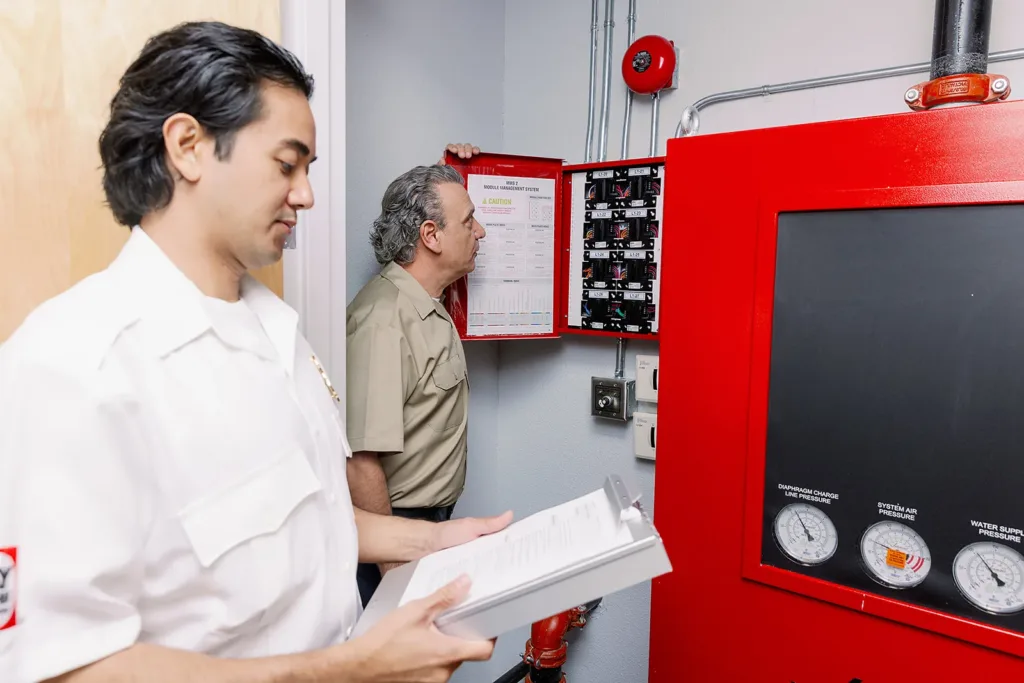
The NFPA develops codes and standards that guide policy across the country. California mandates compliance with NFPA 72 for fire alarm and signaling systems. The latest update to the code includes stricter and more frequent inspections and testing protocols, and a new cybersecurity mandate. In particular, a separate chapter in the code includes enforceable requirements for network-connected fire alarm systems and formal security procedures to ensure protection from digital threats.
Most business owners think of their fire alarm panel as a standalone safety device that detects smoke, triggers an alert, and calls for help. However, modern fire alarms are different.
As networked devices, fire alarms communicate with monitoring centers over IP connections, integrate with building management systems, receive remote software updates, and, in many cases, share pathways with other networks. That connectivity is operationally valuable, but it creates vulnerabilities.
The shift to mandatory cybersecurity requirements in NFPA 72 marks a watershed moment for networked fire alarm systems. Previously relegated to informational guidance, cybersecurity now occupies a mandatory chapter in the national fire alarm and signaling code. Modern fire detection systems are no longer isolated analog devices, but interconnected digital networks vulnerable to cyber threats.
In practice, if your fire alarm panel connects to an external network, it’s now subject to enforceable cybersecurity standards. For businesses that have modernized their fire alarm infrastructure with IP-based communicators, this is an immediate fire code compliance consideration.
The path to managed compliance
Keeping a commercial fire alarm system in compliance is no longer a task you can hand off to a single annual inspection. It requires ongoing management, such as tracking code adoption timelines, maintaining documentation, coordinating between fire safety and IT stakeholders, and ensuring that every component of your life safety system is performing as required under the specific codes that govern your jurisdiction.
This is called managed compliance, a total lifecycle approach to fire and life safety systems that keeps your business updated, documented, and protected, not just at inspection time, but continuously.

Commercial fire alarm monitoring
At the foundation of any life safety strategy is professional monitoring. A fire alarm system that detects smoke or heat but can’t reliably communicate that alert to a monitoring center and emergency services is not providing the necessary protection. Most business insurance policies require your fire alarm system to be connected to a 24/7 central station monitoring system in order to qualify for premium discounts, and may also require a UL-certified system.
Bay Alarm’s UL-listed monitoring center provides around-the-clock commercial fire alarm monitoring across California and the West Coast, with redundant communication pathways designed to maintain connectivity even when primary network infrastructure is disrupted, in real time.
Carbon monoxide and smoke detection
The 2025 California Fire Code requires the installation of modern automated fire detection systems in new and renovated commercial buildings, including smart alarms capable of detecting smoke, heat, and carbon monoxide (CO), and notifying emergency services instantly.
The latest edition of NFPA 72 includes an updated definition of “carbon monoxide source” to reflect that CO production is not limited to fuel-burning appliances. This means that a new set of businesses (that include parking structures, loading docks, generators, or any combustion-related equipment) is required to install carbon monoxide detectors.
Proactive disaster preparedness
Beyond fire and smoke, West Coast businesses face environmental threats that a traditional alarm panel isn’t designed to address. Wildfires, smoke infiltration, extreme heat events, earthquakes, and power disruptions all represent operational risks that an integrated security strategy can help manage.
Proactive disaster preparedness is essential for businesses in the Bay Area and beyond. A business that emphasizes strategic planning will greatly enhance its ability to protect lives and assets, maintain business continuity, and recover quickly from an unexpected environmental event.
There are new regulations as well. The 2025 California Wildland-Urban Interface (WUI) Code, effective January 1, 2026, is a new standalone document that consolidates wildfire regulations from the building, residential, and fire codes. It mandates strict materials, design, and construction standards for new buildings in different fire hazard severity zones.
Fire insurance and compliance
Similarly, in 2026, Washington State updated its fire code to create wildfire risk and hazard maps to update building codes in high-risk areas, as well as a mandate for insurers to report fire losses.
With 80 years of fire protection experience and deep ties to local regulatory agencies, Bay Alarm saved a business with no fire protection in place. Learn how we delivered peace of mind.
Let’s briefly cover insurance. Basic compliance (a functioning, code-compliant fire alarm system) is typically a prerequisite for commercial property coverage.
Many insurance companies may offer discounts for installing life safety systems that include cutting-edge features and 24/7 professional monitoring. Regular maintenance and a clean inspection history can also contribute to favorable premium treatment over time.
On the other hand, a fire in an inadequately protected or non-compliant facility can result in denied or reduced claims, business interruption losses, and potential liability exposure. Compliance isn’t just about meeting code; it’s also about ensuring that your insurance coverage performs when you need it.
Navigating the compliance changes with an expert
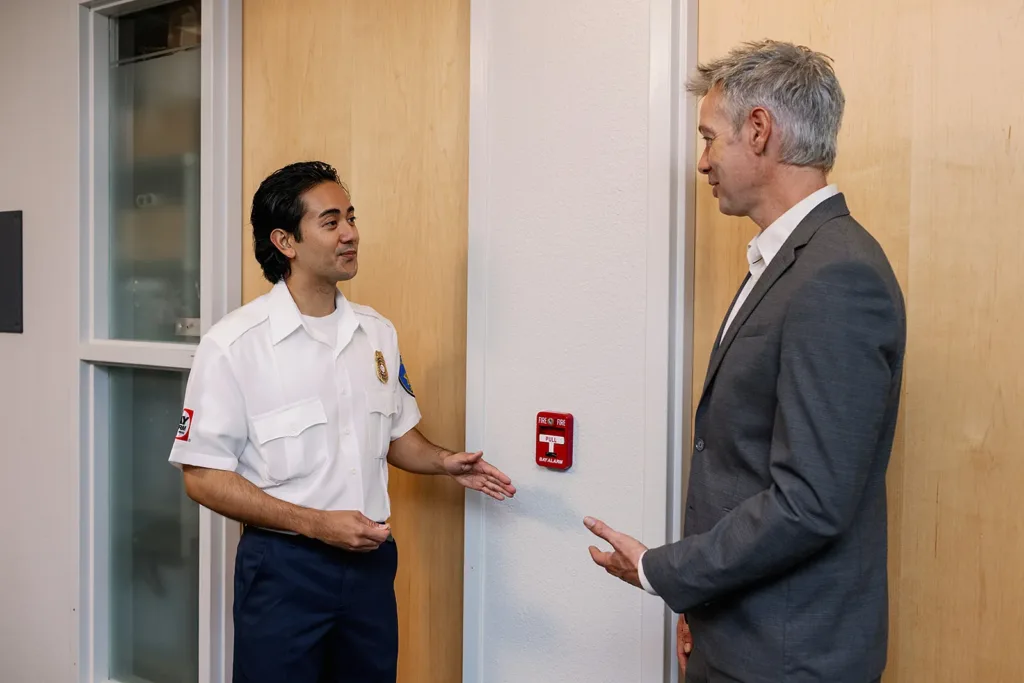
Ensuring managed compliance and navigating the continuously shifting compliance landscape can be challenging for a business of any size. That’s why working with a monitoring and service provider who understands local, state, and federal regulations and all relevant fire code requirements is increasingly important.
Bay Alarm has been installing and monitoring fire alarm systems on the West Coast since our founding. We hold the licenses, certifications, and jurisdictional knowledge to design, install, inspect, and monitor systems that meet your business needs.
Our approach to life safety is the same as our approach to security broadly. We provide an end-to-end service. From design and installation to compliance and maintenance, we’ll ensure your system offers the strongest protection available. Get in touch with us today.