
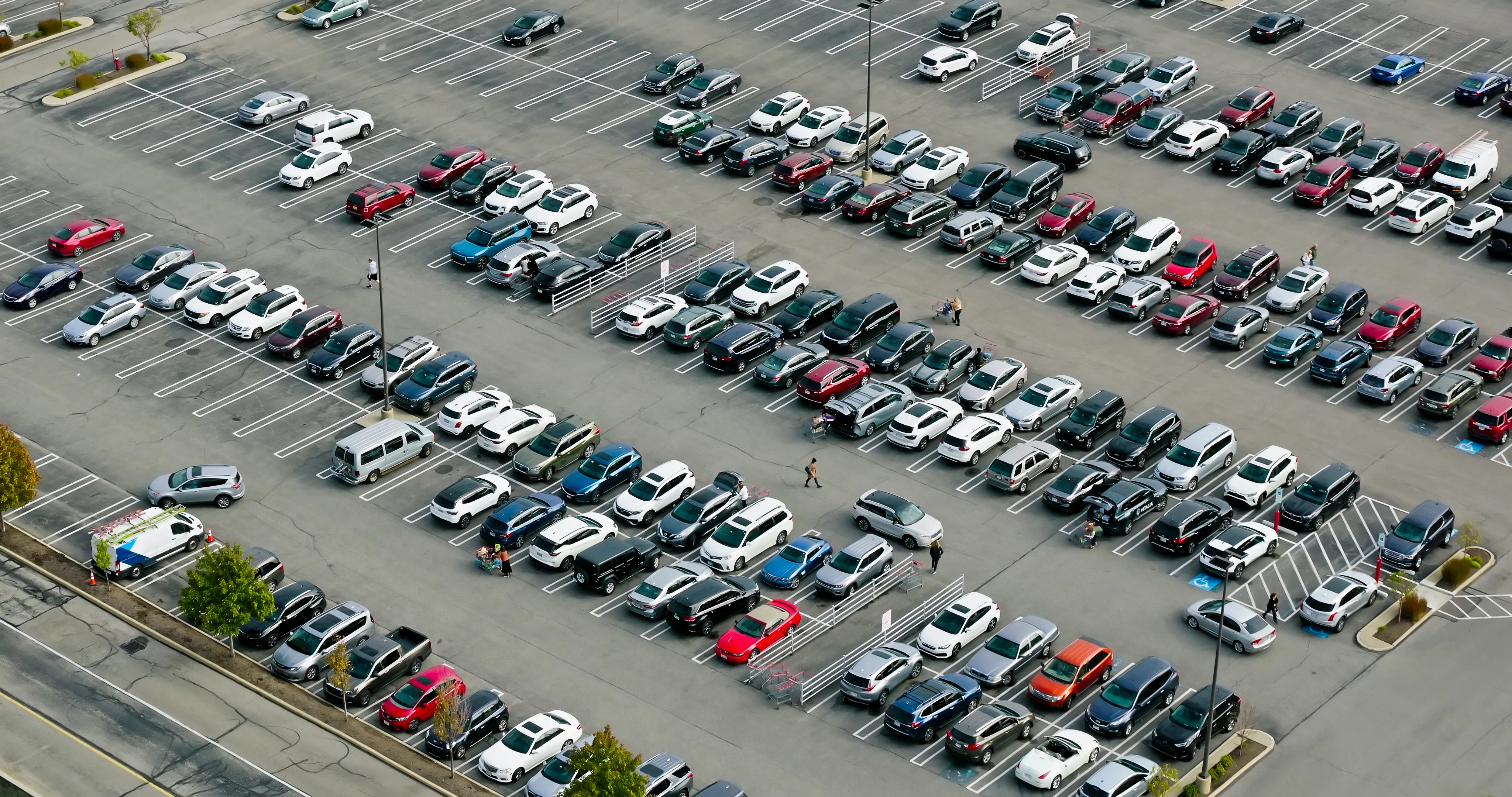
Parking lot security: Strategies to deter crime in your lot or garage
We’ve all had that feeling. You walk out to your car late at night, keys clutched in your hand, glancing over your shoulder. Whether you are an employee leaving work after a long shift or a customer visiting a shopping center, the safety of the parking area matters. For business owners and property managers, it’s not just a feeling—it’s a major responsibility.
Parking lots and garages are notoriously vulnerable spaces. They are often large, somewhat isolated, and filled with valuable assets (cars) and distracted people. The good news is that you don’t need to turn your lot into a fortress to make it safe. With the right mix of technology, design, and general understanding, you can create an environment that discourages criminals and keeps visitors safe.
In this guide, we will break down the essentials of parking lot security. We’ll explore why these areas are risky, how simple design changes can make a huge difference, and what role modern technology plays in keeping watch when you can’t.
Why parking lots are high‑risk zones for business crime
It might seem obvious that a dark, empty space attracts trouble, but the statistics behind parking lot crime are eye-opening. According to data often cited by the Bureau of Justice Statistics, a significant percentage of property crimes occur in parking lots or garages. But why is this specific area so attractive to criminals?
The answer usually boils down to three factors:
- Opportunity
- Isolation
- Escape routes
Criminals look for targets where they are unlikely to be seen or interrupted. A sprawling parking lot often provides rows of cars to hide behind. In parking garages, concrete pillars and stairwells offer even more cover. Then, once a crime is committed—whether it’s a car break-in or a catalytic converter theft—the open nature of a lot allows for a quick getaway.
When we talk about “parking lot security,” we aren’t just talking about preventing theft. Parking lot also means preventing:
- Vandalism: Keyed cars, graffiti, and broken windows.
- Violent crime: Robberies or assaults on staff and customers.
- Liability issues: Slips, falls, or accidents caused by poor maintenance or lighting.
Understanding these risks is the first step toward fixing them. If you know that isolation is the enemy, you can design your security strategy to eliminate those lonely, hidden corners.
How lighting, maintenance & design reduce vulnerabilities
Before you invest in expensive cameras or hire guards, it’s smart to start by looking at the physical environment of your lot. This is often referred to as CPTED (Crime Prevention Through Environmental Design). The idea is simple: change the environment to make crime difficult and risky.
The power of lighting
Lighting is arguably the most critical factor in parking lot security. Shadows are a criminal’s best friend. If your lot is brightly lit, it removes the cover of darkness.
- Uniformity is key: You don’t just want bright spots; you want consistent light coverage across the entire pavement.
- LED upgrades: Consider switching to LED lights. They provide cleaner, white light that improves visibility and color rendering. LEDs can help witnesses accurately recall clothing or car colors.
- Motion sensors: For less-trafficked areas, motion-activated lights can startle intruders and alert security staff.
Maintenance matters
A poorly maintained lot sends a signal that “no one is watching.” This is sometimes called the “Broken Windows Theory.” If you leave trash, graffiti, or burnt-out lights unattended, it suggests that security is lax.
- Landscaping: Keep bushes and hedges trimmed low (usually below 3 feet) so they don’t provide hiding spots. Trim high tree branches (above 7 feet) to ensure they don’t block light fixtures or camera views.
- Pavement repair: Fix potholes and cracks promptly. This prevents accidents and shows you care about the property.
- Clear signage: Use signs to direct traffic flow and clearly mark emergency exits or help stations.
What role do video surveillance and live monitoring play in parking lot safety?
While good lighting is essential, it can’t record evidence or alert the police. This is where video surveillance steps in. Cameras act as both a deterrent and a witness. When a potential thief sees a camera, they often move on to an easier target.
However, traditional recording isn’t always enough. If a camera just records a crime happening at 2:00 AM, and you don’t see the footage until 9:00 AM, the damage is already done. This is why many businesses are moving toward live video monitoring.
The benefits of live monitoring include:
- Real-time intervention: Trained agents watch your cameras in real-time. If they see suspicious activity, they can intervene immediately.
- Voice-down capabilities: Many systems allow agents to speak through a loudspeaker. Hearing a voice say, “You in the blue jacket, leave the premises immediately, the police have been called,” is incredibly effective at stopping crime before it starts.
- Police priority: Police often treat verified alarms (where a human confirms a crime is in progress) with higher priority than unverified automated alarms.
These integrated video solutions can transform a passive camera system into an active security tool, and many security providers offer them as an upgrade.
No access to power? No problem.
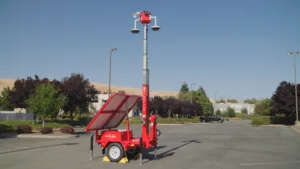
Remote areas of a parking lot often lack access to the power grid—that’s where mobile security units excel. These portable security trailers provide a flexible solution for hard-to-reach areas. Equipped with solar panels, battery backups, and cellular connectivity, they deliver live video monitoring without requiring a single wire.
Their self-contained, towable design allows you to place security coverage exactly where it’s needed throughout your parking lot.
How parking lot access control and perimeter measures deter unauthorized use
Sometimes the best way to secure a parking lot is to control who can get in and out. Access control isn’t just for building doors; it works for parking structures and gated lots too.
If your parking area is open to the public, you have less control. But if you have a private employee lot or a resident garage, you should restrict access.
- Boom gates and barriers: These physical barriers stop vehicles from entering without credentials. They are excellent for preventing unauthorized parking and slowing down traffic.
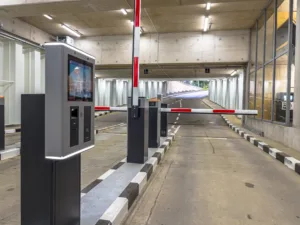
- Key cards and fobs: Employees or residents can use RFID cards to open gates. This ensures only authorized personnel can enter.
- License Plate Recognition (LPR): Advanced systems can read license plates automatically. If a plate matches an authorized list, the gate opens. If it matches a “banned” list, security is alerted.
Perimeter fencing is also crucial. A fence defines your property line and forces pedestrians and vehicles through specific, monitored entry points. This funneling effect makes it much easier to watch who comes and goes.
Why security guards and patrols still matter in parking lot environments
In the age of AI cameras and automated gates, you might wonder if human security guards are still necessary. The answer is often yes, especially for larger or high-risk properties. Technology is amazing, but it lacks human intuition and presence.
The human element provides:
- Unpredictability: A patrol car driving through the lot at random intervals keeps criminals guessing. They can’t easily time their actions if they don’t know when the guard will return.
- Customer service: Guards can do more than catch bad guys. They can escort employees to their cars late at night, help with dead batteries, or give directions. This boosts the feeling of safety for everyone.
- Immediate physical response: If a fight breaks out or someone is injured, a guard on-site can respond faster than police or paramedics.
However, guards can be expensive. Many businesses use a hybrid approach—relying on technology for 24/7 coverage and using patrols during peak risk hours or for specific events.
How to build a parking lot security plan for open lots and structured garages
Creating a security plan isn’t a one-size-fits-all process. An open surface lot faces different challenges than a multi-level concrete garage.
For open surface lots
Your main challenges here are perimeter control and lighting coverage.
- Define the perimeter: Use fencing or landscaping to limit entry points.
- Maximize sightlines: Ensure you can see across the entire lot. Avoid planting large trees in the center of the lot.
- Cover the whole area: Place cameras on high poles to get wide-angle views of the entire space.
For structured garages
Garages are trickier because they have walls, pillars, and stairwells that create blind spots.
- Secure the stairwells: These are high-risk areas. Ensure they are well-lit and consider access control on stairwell doors.
- Paint it white: Painting walls and ceilings white reflects light, making the garage brighter and eliminating shadows.
- Monitor entry/exit: Pay close attention to the choke points where cars enter and leave. High-resolution cameras here are vital for capturing license plates.
- Emergency call stations: Install “blue light” emergency phones or panic buttons on every level so people can call for help instantly.
For more detailed guidelines on environmental design, you can refer to resources from The National Institute of Crime Prevention, which offers extensive training and information on CPTED principles.
Taking the next step
Parking lot security is an ongoing process. It requires regular audits to ensure lights are working, cameras are recording, and procedures are being followed. By layering these different strategies—better design, smart technology, and human vigilance—you create a safer environment for everyone who visits your business.
Partnering with a security expert like Bay Alarm can provide the professional assessment and tools you need to implement these layers effectively.
Don’t wait for an incident to happen before you act. Walk your lot today. Look for the dark corners. Check your fences. A proactive approach is always the best defense.
Start a conversation with a Bay Alarm security expert.
By submitting this form, you agree to receive marketing emails from Bay Alarm. You can unsubscribe at any time.