

Catalytic converter theft protection for businesses: Shields, devices, and security systems that work
Imagine arriving at your business on a busy Monday morning, only to find that your fleet sounds like roaring monster trucks. It’s a loud, startling noise, but the sinking feeling in your stomach is even worse. You’ve likely become the latest victim of catalytic converter theft.
This scenario is playing out in parking lots and fleet yards across the country. It takes a thief less than two minutes to slide under a vehicle, saw through the exhaust pipe, and vanish with a part worth hundreds—sometimes thousands—of dollars.
In this guide, we will break down exactly why this is happening and, more importantly, how you can stop it. We’ll explore effective catalytic converter theft protection, from physical shields to advanced security systems, ensuring your business stays running smoothly without costly interruptions.
Why catalytic converters are targeted by thieves
You might wonder why a seemingly boring car part is such a hot item for criminals. The answer lies inside the metal canister itself. Catalytic converters contain precious metals like platinum, palladium, and rhodium. These metals act as catalysts to reduce harmful emissions from your engine.
Unfortunately, the market value of these metals has skyrocketed. For example, rhodium can be worth significantly more than gold per ounce. Thieves know they can sell a stolen converter to a scrap yard for quick cash, often ranging from $50 to several hundred dollars, depending on the vehicle model.
Because trucks and SUVs sit higher off ground, they are easier for thieves to slide underneath without needing a jack. This makes business fleets particularly vulnerable targets. The high reward and low risk make this crime incredibly attractive to opportunistic criminals.

How catalytic converter theft impacts businesses
The cost of a stolen converter goes far beyond the price of the replacement part. While replacing the unit can cost between $1,000 and $3,000, the operational downtime is often the real killer for businesses.
Here is how theft hits your bottom line:
- Vehicle downtime: A truck without a converter is illegal to drive in many places and sounds terrible. It has to sit in the shop, meaning it can’t make deliveries or service calls.
- Repair costs: Beyond the part itself, you have labor costs and potential damage done to the undercarriage during the theft.
- Insurance premiums: Repeated claims for theft can lead to increased insurance premiums or higher deductibles.
- Reputation damage: If you can’t show up for your customers because your fleet is grounded, they might look elsewhere.
What catalytic converter theft protection involves
Effective catalytic converter theft protection isn’t about just one silver bullet; it is about creating layers of security. You want to make your vehicles less attractive and much harder to access than the ones next door.
A good protection strategy involves three main layers:
- Deterrence: Visual cues that tell a thief, “Don’t bother.”
- Physical Barriers: Devices that make the theft physically difficult and time-consuming.
- Surveillance: Systems that detect intruders and alert authorities before the damage is done.
By combining these elements, you increase the time and effort required to steal a converter, which usually pushes thieves to move on to an easier target.
Types of catalytic converter anti-theft devices
The market has responded to this crime wave with several innovative hardware solutions. These devices attach directly to your vehicle to protect the converter. While no device is 100% uncuttable given enough time and the right tools, these devices buy you precious time.
Common types of anti-theft devices include:
- Cable locks: These are heavy-duty steel cables that weave around the converter and frame, making it hard to cut through quickly.
- Clamps: These devices clamp around the converter to secure it to the exhaust pipes, making it difficult to remove with a simple saw.
- Steel plates: Often called shields, these cover the entire area where the converter sits.
Catalytic converter shields and cages
Among the most popular physical barriers are shields and cages. These are often vehicle-specific and offer robust protection.
Shields:
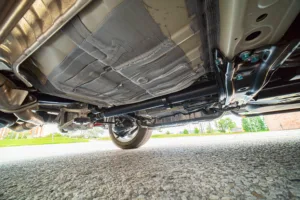
These are typically plates made of aluminum or steel that bolt onto the underside of the vehicle. They act as a physical armor, completely covering the catalytic converter. To steal the part, a thief would first have to unscrew or cut through the shield, which takes time and creates noise.
Cages:
A cage device, such as the popular Cat Clamp, uses wire ropes to create a cage around the converter. This design is difficult to cut because the wire ropes are loose; if a thief tries to use a reciprocating saw, the blade simply shakes the wire rather than cutting through it efficiently.
Choosing the best catalytic converter anti-theft device
With so many options, how do you pick the right one for your fleet? It depends on your budget, your vehicle type, and your specific risk level.
Consider these factors:
- Vehicle Clearance: High-clearance vehicles like delivery trucks need heavy-duty protection because thieves have more room to work.
- Material Quality: Look for stainless steel or high-grade aluminum. You want materials that resist corrosion and are tough to cut.
- Installation: Some devices require professional welding, while others bolt on. Bolt-on options are easier to install but make sure they use security bolts that can’t be removed with standard wrenches.
- Visibility: A bright, visible device can act as a deterrent on its own. If a thief looks under the truck and sees a steel cage, they may decide it’s not worth the effort.
For a deeper dive into vehicle safety ratings and theft statistics, the National Insurance Crime Bureau (NICB) is an excellent authoritative resource to consult.
Alarms and electronic anti-theft solutions
Physical barriers are great, but electronic sensors add a crucial layer of defense. These solutions alert you the moment someone tampers with your vehicle.
Modern alarm systems can be calibrated to detect:
- Vibration: The sawing motion required to cut a pipe creates significant vibration. Sensitive alarms can trigger a siren immediately.
- Tilt: If thieves use a jack to lift a vehicle, a tilt sensor will sound the alarm.
- Heat: Some advanced sensors can detect the body heat of a person under the vehicle.
When an alarm triggers, it draws attention. Most catalytic converter thefts happen in under two minutes, so a loud siren is often enough to send criminals running before they finish the job.
How to improve vehicle security for fleet lots overnight
If you manage a fleet yard, you need to think beyond the vehicle itself. Securing the perimeter is just as important as securing the exhaust pipe.
Here are actionable steps to secure your lot:
- Improve lighting: Thieves hate the spotlight. Install motion-activated floodlights that cover every corner of your parking area.
- Strategic parking: Park your trucks close together or against fences/walls to limit access to the undercarriage.
- Fencing: Ensure your perimeter fence is intact and difficult to climb.
- Video surveillance: Install cameras that cover the lot. Visible cameras are a deterrent, but active monitoring is even better.
Bay Alarm solutions for catalytic converter theft prevention
Ultimately, the best protection is stopping the thief before they even touch your vehicle. This is where live video monitoring changes the game.
At Bay Alarm, we specialize in perimeter security that actively protects your business. Instead of just recording a theft for you to watch later, our systems use analytics to detect intruders the moment they enter your lot. Our monitoring agents can then issue a live audio warning—”You in the blue hoodie, leave the property immediately, the police have been dispatched.”—which often stops the crime in progress.
Protecting your fleet requires a proactive approach. By combining physical shields with intelligent security systems, you can ensure your vehicles are ready to work when you are. Visit bayalarm.com to learn more about securing your commercial property against theft.
Start a conversation with a Bay Alarm security expert.
By submitting this form, you agree to receive marketing emails from Bay Alarm. You can unsubscribe at any time.